What a custom app for a small business actually costs
Honest ranges for a small custom application, what drives the price up or down, the running costs after it's built, and how to keep the first version small enough to be worth it.
“How much does an app cost?” is a fair question with a frustrating answer: it depends. This post is an attempt at a more useful one, with real ranges and what moves you within them.
Rough ranges
| What it is | Example | Typical range |
|---|---|---|
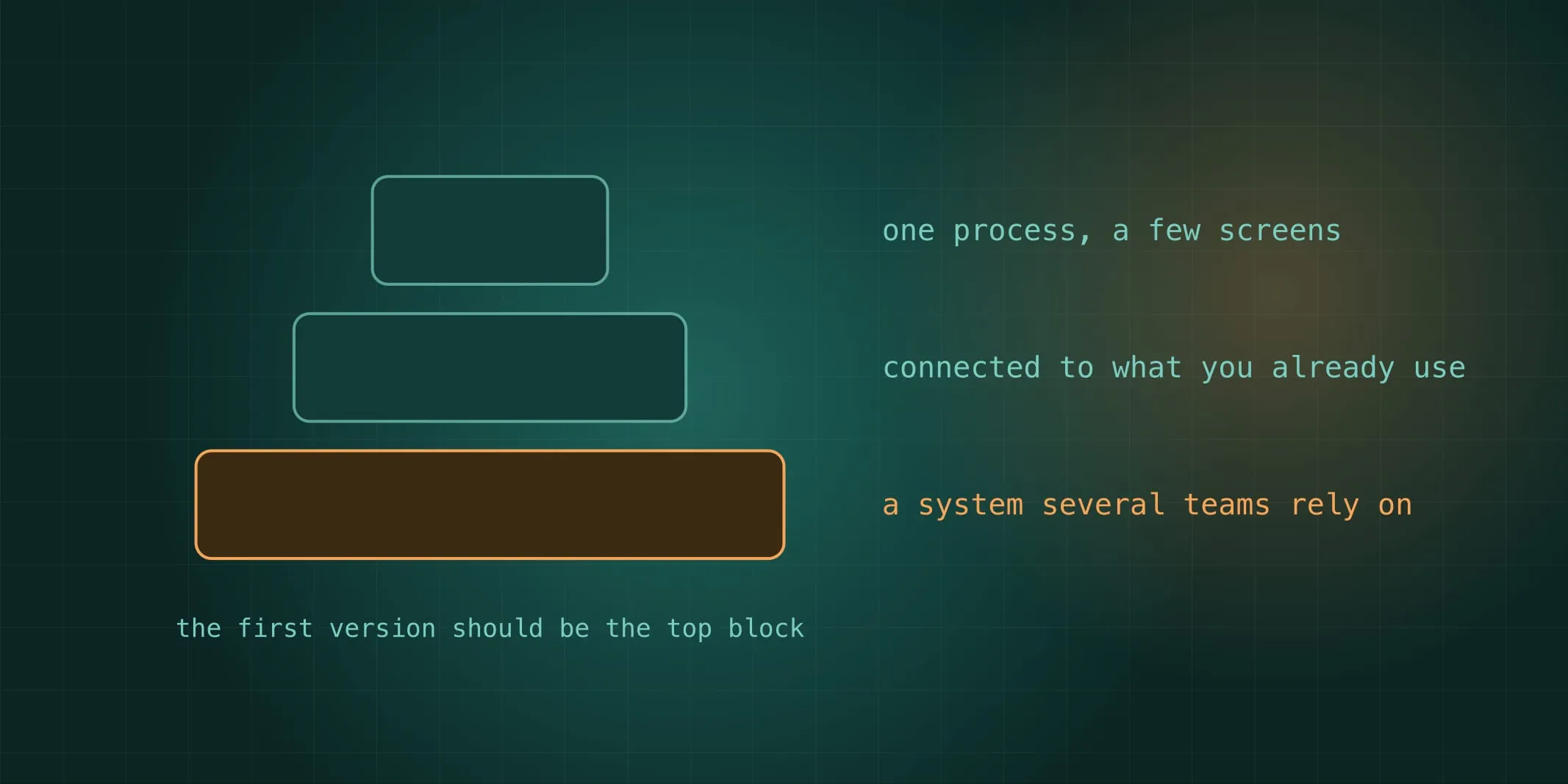
| One process, a few screens | A job sheet with photos and a sign-off, or a booking form with a calendar | £5,000 to £15,000 |
| One process, connected to things you already use | The above, plus it raises the invoice in your accounting package and sends the customer a text | £15,000 to £40,000 |
| A system several teams rely on | Quotes, scheduling, stock and reporting in one place, with different views per role | £40,000 upwards |
These are build costs, agreed up front for a fixed scope. They assume we’re starting from a clear description of the process, which is what the first conversation is for.
What drives the cost
- How many different kinds of people use it. An app for the office is simpler than one for the office, the people on site and the customer.
- What it has to connect to. Each system (accounts, calendar, payments, text messages, your supplier’s portal) is a piece of work. Some connect in a day. Some, usually older ones, fight back.
- How much of the process is rules. “A quote over £2,000 needs a second approval, unless the customer is on the trade list” is easy to describe and takes real care to get right. The more of those, the longer it takes.
- Phones and photos. If people use it on site, with a poor signal, taking photos, it needs to work offline and catch up later. That’s doable, and it’s more work than a desktop form.
- How much exists already. A clean spreadsheet with consistent data is a head start. Ten years of inconsistent data that needs cleaning before it can be imported is a cost of its own.
The running costs
After it’s built, a small app typically costs somewhere between £20 and £150 a month to host, depending on size and what it’s connected to. That’s paid to the hosting provider, in your name, and it’s yours. We don’t rent it to you.
Then there’s upkeep. Software needs small, regular attention: security updates, the occasional change when a connected service changes, and the improvements you’ll want once people are using it. We offer this as a small monthly retainer or as and when you need it. Either way, you own the code and can take it elsewhere.
Keeping the first version small
The most expensive apps are the ones that tried to do everything at once. The best first version does one process, properly, for the people who feel the pain most. It’s in use within weeks, it pays for itself, and the second version is planned from what people actually asked for rather than what anyone guessed.
So when we quote, we’ll usually quote for less than you asked for, and tell you what we’ve left out and why.
What you’re paying for
The same engineers who build cloud platforms for banks, payment providers, logistics companies and startups, applying the same care to a smaller problem: it’s backed up, it’s secure, it’s documented, and it doesn’t fall over. The difference is scale, not standards.
If you’ve got a process in mind, describe it to us and we’ll tell you which row of the table it’s in.